Compiled by BeautyTherapistForms from the sources listed below, checked on 5 November 2026. We sell the templates linked on this page.
How to become a beauty therapist in the UK (2026): qualifications, routes and setting up
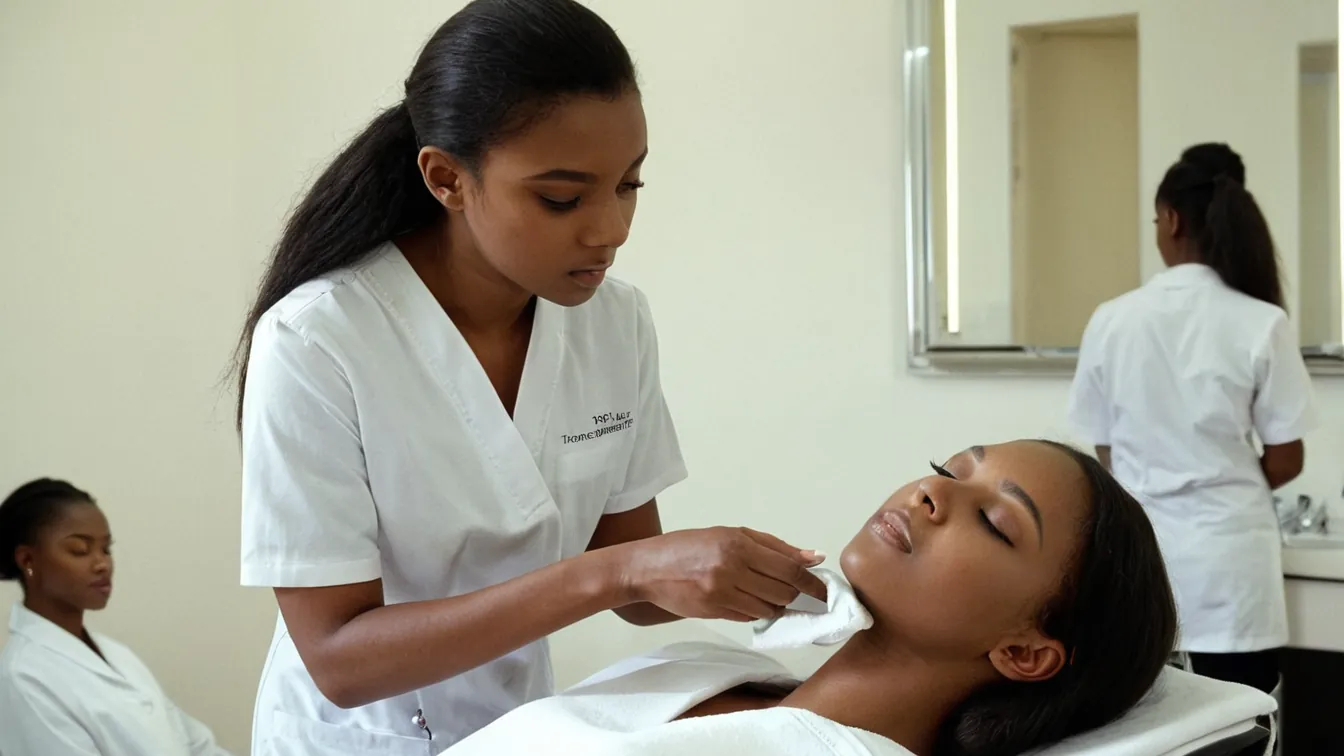
To become a beauty therapist in the UK, most people take a Level 2 beauty therapy qualification at a college, through an apprenticeship or with a private provider, then add Level 3 for advanced treatments. There is no national licence to be a beauty therapist, but you need insurance, may need a council licence or registration for some treatments, and must register with HMRC if you are self-employed.
Do you need qualifications to be a beauty therapist?
There is no law that says you must hold a qualification to call yourself a beauty therapist, but in practice you need one. Salons recruit qualified therapists, and insurers base cover on your qualifications: Salon Gold, for example, says treatments are covered providing you hold a suitable qualification for them.
The National Careers Service lists college courses, apprenticeships, starting as a beauty therapy assistant and studying while you work, and private training providers as the main routes in. It does not list any compulsory national registration. You can join a voluntary register such as the Guild of Beauty Therapists for professional recognition.
Level 2 and Level 3: what each one lets you do
Level 2 is the starting point. The Level 2 Beauty Therapist apprenticeship standard covers waxing, hand and nail treatments, foot treatments, facial skin care, eyelash and eyebrow treatments, make-up and basic back, neck and shoulder massage.
Level 3 builds on it. The Advanced Beauty Therapist standard expects Level 2 or equivalent first, and covers advanced massage including Swedish massage and electrical facial and body treatments such as galvanic, micro-current, microdermabrasion and LED light.
Qualifications are issued by awarding bodies such as VTCT and City & Guilds, and come as diplomas, technical certificates and NVQ diplomas. Before you pay, search the qualification title on the Ofqual register to check it is regulated.
College, apprenticeship or private academy?
Each route leads to the same kind of qualification. What changes is how you pay, how long it takes and whether you earn while you learn.
| Route | Typical length | Cost to you | Good to know |
|---|---|---|---|
| College course, Level 2 | Full or part-time, for example 18 weeks part-time | Example: £1,395, free for some adults on lower incomes | Under 19s normally study free; kit and uniform extra, around £350 at one college |
| Level 2 apprenticeship (ST0630) | Typically 15 months | Employer route, funded up to £7,000 | You are employed and paid; at least 20% of your hours go on training |
| Level 3 apprenticeship (ST0211) | Typically 18 months | Employer route, funded up to £8,000 | Usually needs Level 2 or equivalent first |
| Private academy | From short courses to full diplomas | Set by the provider | Check it leads to a regulated qualification your insurer accepts |
Insurance and council licensing
Get insurance before you treat a paying client. Policies usually combine public liability, product liability and treatment risk; Salon Gold advertises sole trader cover from £44.80 a year, excluding its admin charge, and the price rises with the treatments you add.
Some treatments need a council licence or registration. In many London boroughs you need a special treatment licence for treatments such as massage, manicure, electrical treatments and light treatments. Elsewhere in England, councils can require registration for tattooing, semi-permanent skin colouring, cosmetic piercing, electrolysis and acupuncture. Our beauty treatment licence guide covers each UK nation.
Registering with HMRC if you are self-employed
GOV.UK says you must register for Self Assessment if your trading income is more than £1,000 in a tax year, by 5 October after the end of the tax year in which you started.
For 2026/27, Class 4 National Insurance is 6% on profits between £12,570 and £50,270 and 2% above that. Class 2 is treated as paid if your profits are £7,105 or more, and you can pay it voluntarily at £3.65 a week below that to protect your State Pension record.
Making Tax Digital for Income Tax applies in three stages: from 6 April 2026 if your qualifying income was over £50,000 in 2024/25, from 6 April 2027 if it was over £30,000 in 2025/26, and from 6 April 2028 if it was over £20,000 in 2026/27. Qualifying income is your self-employment and property income added together, before expenses. If you are in scope you keep digital records and send quarterly updates through compatible software, and you still submit a tax return every year by 31 January. You must register for VAT if your taxable turnover goes over £90,000.
Setting up: mobile, home or salon
Mobile and home-based work keeps costs low, but GOV.UK says you may need planning permission, permission from your mortgage provider or landlord, and possibly business rates. Our home and mobile paperwork checklist walks through each one, and the salon paperwork guide covers premises.
Wherever you work, you will hold clients' health details, so you are handling personal data. The ICO says sole traders that use personal information need to pay a data protection fee unless they are exempt. Have a consultation form, patch test records and consent forms ready before your first booking.
Get the free Beauty Therapist Start-Up Planner: 17 questions and a signed declaration, emailed to you as a print-ready form.
Free template
Get the print-ready Beauty Therapist Start-Up Planner
A print-ready planner that takes you from choosing a course to your first paying client: qualifications, insurance, council checks, HMRC and paperwork. Free, and yours to keep.
Frequently asked questions
How long does it take to become a beauty therapist?
A part-time Level 2 college course can take a few months, while the Level 2 apprenticeship typically takes 15 months and the Level 3 advanced apprenticeship typically takes 18 months. Full-time college courses usually run over an academic year.
Do I need a licence to be a beauty therapist in the UK?
There is no national licence for beauty therapists. Your council may require a licence or registration for certain treatments or premises, particularly in London and for piercing, electrolysis, tattooing and semi-permanent make-up, so ask before you start.
Can I become a beauty therapist without going to college?
Yes. You can train through an apprenticeship, with a private provider, or by starting as a beauty therapy assistant and studying while you work. Check that the course leads to a regulated qualification your insurer accepts.
How much do beauty therapists earn?
The National Careers Service gives an average of £23,000 a year for starters and £29,000 for experienced therapists, usually for 30 to 37 hours a week. Self-employed income depends on your prices, bookings and costs.
Do I need Level 3 to do lash lifts or brows?
Eyelash and eyebrow treatments are covered at Level 2 in the apprenticeship standard. Advanced electrical treatments and massage come at Level 3. Always check what your insurer will cover with the qualifications you hold.
Sources
- Beauty therapist job profile, National Careers Service
- Beauty therapist apprenticeship standard (ST0630), Skills England
- Advanced beauty therapist apprenticeship standard (ST0211), Skills England
- Become an apprentice, GOV.UK
- Register as a sole trader, GOV.UK
- Self-employed National Insurance rates, GOV.UK
- Check if you need to use Making Tax Digital for Income Tax, GOV.UK
- Register for VAT, GOV.UK
- Data protection fee, ICO
- Level 2 Diploma in Beauty Therapy, Cambridge Regional College
- Hair and beauty therapist insurance, Salon Gold
- Find out if and when you need to use Making Tax Digital for Income Tax, GOV.UK
- Work out your qualifying income for Making Tax Digital for Income Tax, GOV.UK
- Using Making Tax Digital for Income Tax for the first time, GOV.UK
Every treatment starts with a signature
Consultation, consent and patch-test records ready before the client sits down, so you are covered whatever happens.
The therapist who is covered, whatever happens.
These articles are general guidance for UK beauty therapists, not legal or medical advice. Our forms are editable templates: adapt them to your specific treatments, your product manufacturer's protocol and your insurer's terms.